
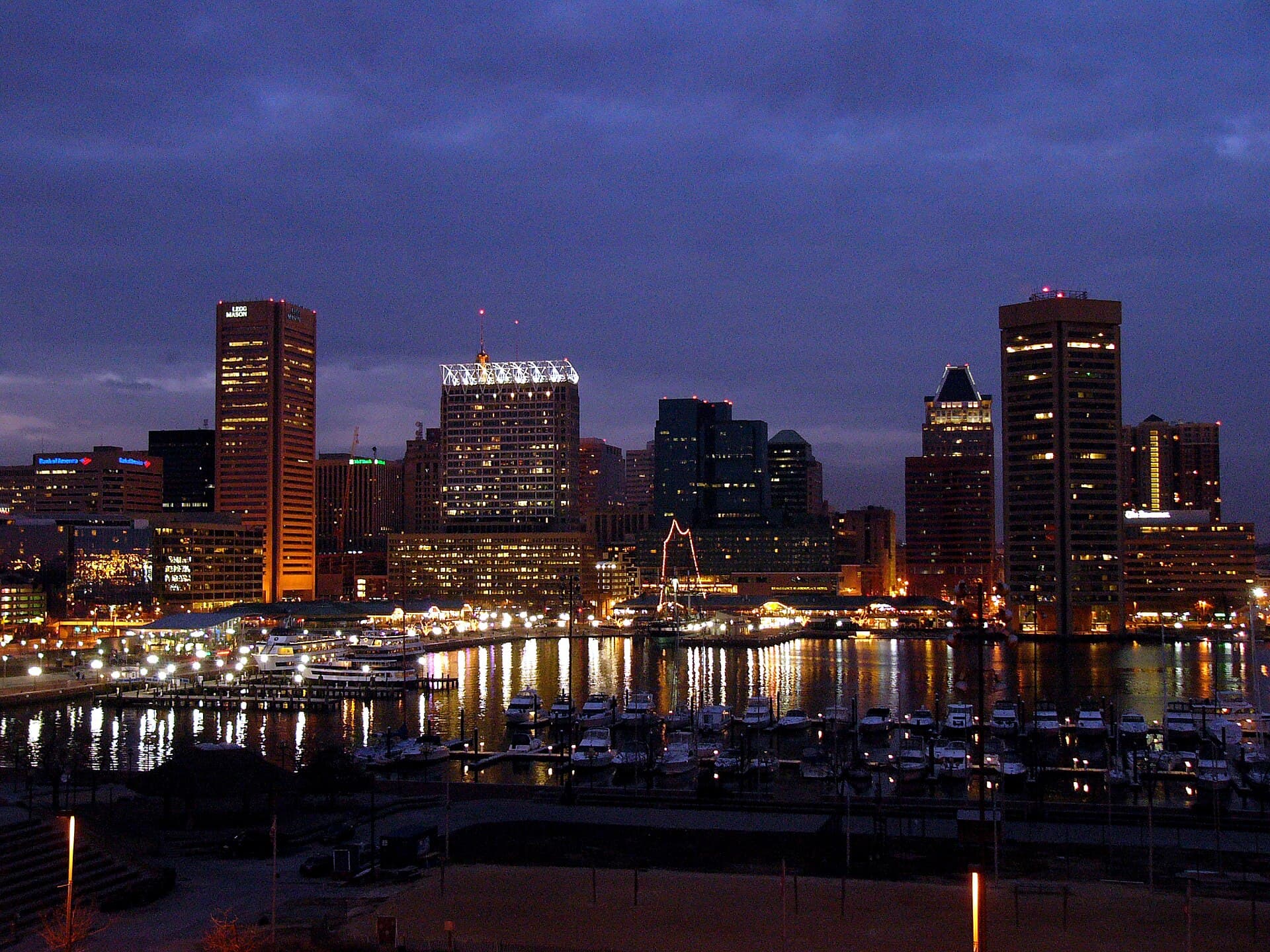
Electrician marketing · the Baltimore Metro
Electrician marketing in the Baltimore Metro
Baltimore is a metro of eras: 1900s rowhomes inside the city, post-war capes in Dundalk and Glen Burnie, 1970s Columbia villages, and new builds pushing out past Bel Air. Every era fails electrically in its own way, and the contractor who names the neighborhood and the problem wins the search.
The Baltimore Metro is roughly 2.8 million people wrapped around one harbor, and almost all of it sits in BGE territory inside a ring drawn by I-695. The city itself holds block after block of Formstone rowhomes wired before the Depression. The first Beltway ring (Dundalk, Essex, Catonsville, Parkville, Glen Burnie) went up fast after the war on 60-amp services. Columbia's planned villages date to the aluminum-branch-wiring era. Farther out, Bel Air and Westminster are still pouring new foundations.
That layering is the whole marketing opportunity. A searcher in Canton typing "knob and tube rewiring" and a searcher in Ellicott City typing "EV charger installer" are both inside your drive time, and Google shows each of them a different three-pack. The regional players spread across both metros of the Baltimore-Washington corridor rarely bother to speak to either one specifically.
The statewide picture (licensing, the corridor economics, the DC-suburb money) lives on our Maryland page. This page is the street-level version: which niches pay in the Baltimore Metro, and how to show up for them.
Rowhome rewires from Canton to Pigtown pay for the truck
Rewiring Baltimore rowhomes is the steadiest high-ticket residential niche in the metro. Tens of thousands of city rowhomes still run on fuse boxes, 60-amp services, and knob-and-tube hidden behind plaster and Formstone, and nearly every one of them surfaces the moment a buyer's inspector opens the panel. Home sales in Canton, Highlandtown, Hampden, Remington, and Pigtown generate a constant stream of inspection-triggered upgrade work, plus the flippers who need three properties rewired this quarter and will call whoever answered last time.
The search behavior is unusually specific here, because people type the problem the inspector just named for them. A page that answers what a rowhome rewire or heavy-up costs in Baltimore, with photos of real panel swaps in real alleys, feeds exactly the question Google's AI answers now quote. Our panel upgrade playbook is built on this pattern, and the panel upgrade marketing guide walks the page structure.
- Inspection-triggered buyers are on a settlement deadline, so same-week response wins the job at full price
- Flippers and investors are repeat accounts; one good rewire in Highlandtown becomes six
- Photograph the before panel every time; a fuse box picture sells the heavy-up better than any copy
Win the map pack neighborhood by neighborhood, inside and outside the Beltway
Google splits the Baltimore Metro into dozens of separate map packs, and each one can be won on its own. The three-pack for "electrician towson" shares almost nothing with the one for "electrician glen burnie" twenty-five minutes down I-97, and city searchers go a level deeper: they search by neighborhood, Federal Hill or Hampden, the way suburbanites search by town. A shop that anchors one patch and stacks reviews naming it will outrank a bigger competitor whose reviews are scattered across three counties.
The mechanics: a Google Business Profile with service areas that match where your trucks actually go, weekly photos from real jobs, and the review ask made in the driveway with the neighborhood in mind, so "rewired our Catonsville kitchen" moves rankings block by block. Then build a page for each town you want next; the city pages guide covers how to do that without producing thin duplicates.
Pier and boat lift wiring from Middle River to the Magothy
Chesapeake waterfront wiring is the Baltimore Metro's most underpriced niche online. The eastern side of Baltimore County (Middle River, Bowleys Quarters, Essex) and the Anne Arundel creeks around Pasadena and Severna Park hold thousands of homes with private piers, boat lifts, and shore power pedestals. It is code-heavy work over water, electric shock drowning is the fear every waterfront owner has read about, and almost no contractor in the metro has built a page that speaks to it.
These owners live in the house, unlike resort-market absentees, but they pay resort-market rates: lift motors, pier lighting, GFCI protection, hot tub circuits on the deck facing the water. One dedicated pier-and-dock page with photos from real Chesapeake jobs tends to rank fast for lack of competition, and every job it books sits at the high end of your ticket range. The hot tub playbook stacks neatly on top of the same waterfront customer.
Sparrows Point is a jobsite again, and the newcomers hire from Google
Tradepoint Atlantic has turned the old Bethlehem Steel site at Sparrows Point into a logistics and industrial campus measured in thousands of acres, and the electrical work spills well past the gate. Warehouse fit-outs, dock and yard power, and the subcontractor churn of a long buildout create commercial openings for shops that never chased commercial before, while the wage growth underneath it is renovating the post-war housing stock of Dundalk and Essex one panel at a time.
The metro's other demand engine is rotation. Fort Meade on the southern edge and Aberdeen Proving Ground up I-95 in Harford County cycle military families and defense contractors through constantly, and those households arrive with no neighbor to ask. They hire from what they can verify online: reviews, license number, real photos. Being findable and provable is the entire pitch to a transplant, and the reviews guide is where that starts.
Rental licensing keeps city landlords calling back
Baltimore City requires rental properties to be licensed and periodically inspected, and every inspection cycle produces electrical punch lists. The city's rowhome rental stock is enormous, much of it held by landlords and property managers running dozens of doors, and each failed item (ungrounded outlets, missing GFCIs, an overloaded panel) is a work order that has to be closed before the license renews. One property manager on your books outproduces twenty one-off homeowners.
Marketing to them is direct: a page that names the rental inspection process, shows you know the paperwork, and promises documented, invoiced work a manager can file. Permitting is the other trust signal: Baltimore City and Baltimore County are separate jurisdictions with separate permit offices, and confusing them stalls jobs. State licensing itself is uniform statewide; the Maryland page covers that picture, and saying plainly that you pull permits on both sides of the city line covers the rest.
What your customers are searching
Rankings are won keyword by keyword. In the Baltimore Metro, these are the kinds of searches that turn into booked jobs:
- “electrician towson md”
- “electrician glen burnie”
- “knob and tube rewiring baltimore”
- “heavy up baltimore cost”
- “pier wiring pasadena md”
- “boat lift electrician middle river”
- “emergency electrician dundalk”
- “ev charger installation columbia md”
Playbooks that fit the Baltimore Metro
Where the high-ticket work is
Panel Upgrades
Fuse boxes and 60-amp services behind Formstone from Canton to Catonsville, surfaced by every buyer's inspection, the metro's most reliable high-ticket pipeline.
See the playbook →Emergency Electrician
Century-old city wiring and tree-heavy BGE suburbs fail at night and on weekends; a dense metro of 2.8 million keeps after-hours call volume real year-round.
See the playbook →EV Charger Installation
Columbia, Ellicott City, and Towson garages are adding chargers on BGE rebates, and 1970s Howard County panels turn many installs into heavy-up tickets.
See the playbook →Frequently asked questions
How competitive is electrician marketing in the Baltimore Metro?
Is rowhome rewiring worth marketing as its own service?
Do I need different permits for Baltimore City and Baltimore County work?
What should a Baltimore Metro electrician spend on marketing?
Do you already work with an electrician in the Baltimore Metro?
Ready to dominate your patch of the Baltimore Metro?
One electrician per service area. If your area is open, we'll show you exactly what the Local Dominance Method would look like for your business — before you pay anything.
No retainers to start · One electrician per service area
Nearby