
Electrician marketing · the Seattle Metro
Electrician marketing in the Seattle Metro
Four counties, four utilities, and the most research-heavy homeowners in the West. The metro's money is hiding in specifics: knob-and-tube rewires in Ballard Craftsmans, backyard cottage sub-panels, Lake Washington dock wiring, and an Eastside that treats a $40,000 smart-home ticket as normal.
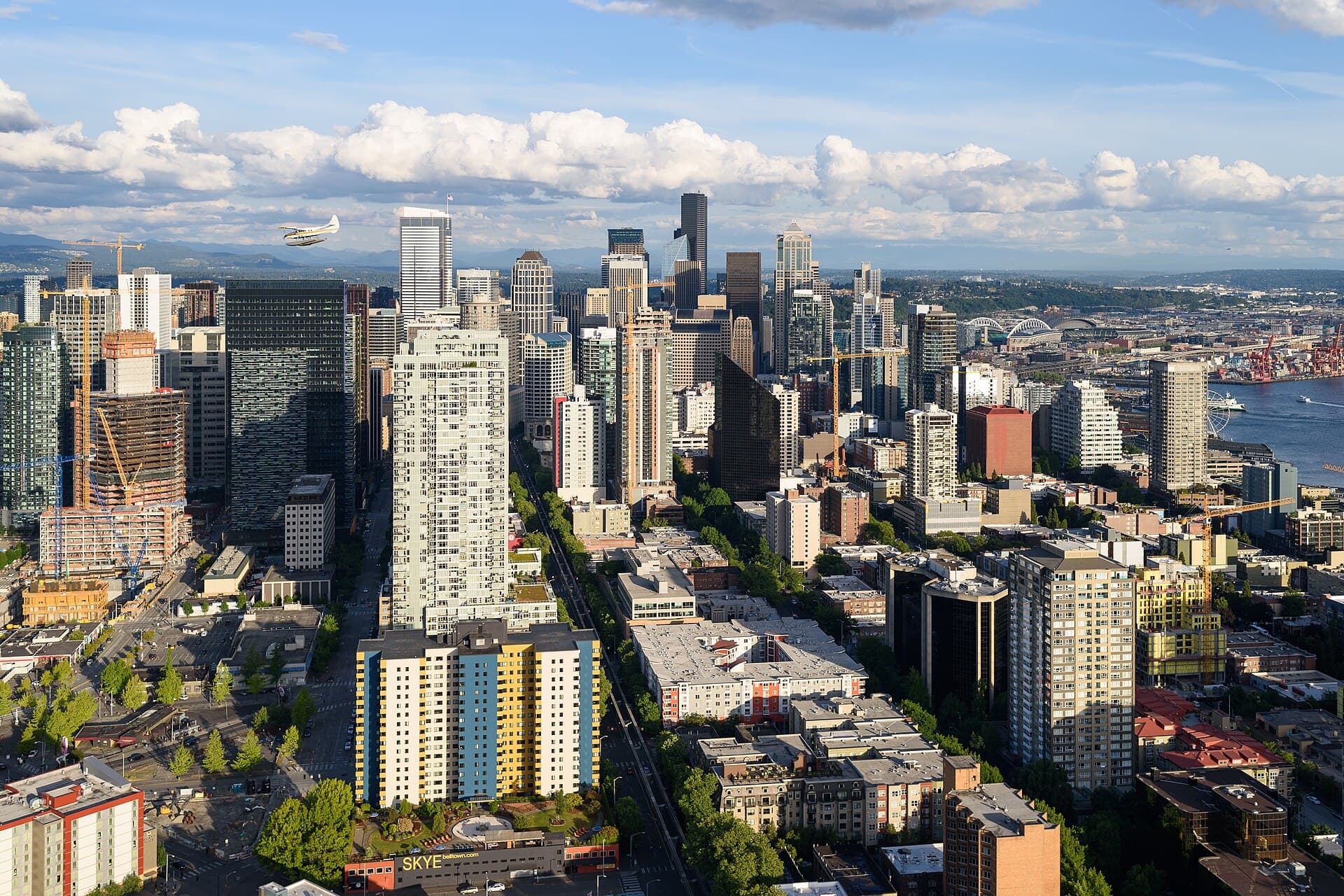
The Seattle metro packs most of Washington's electrical demand into a strip you can drive in ninety minutes: Everett to Tacoma on I-5, Seattle to the Sammamish plateau on I-90 and 520. But treating it as one market is how contractors burn budgets. Google slices this metro into dozens of micro-markets: the map pack a homeowner sees in Ballard shares almost nothing with the one in Kirkland, four miles across Lake Washington.
The housing stock does the segmenting for you. Seattle proper is full of Craftsman homes wired before World War II, with knob-and-tube still live behind the plaster. The first-ring suburbs (Shoreline, Burien, Renton, Kirkland) are 1950s and 60s ranches on 100-amp panels that choke on a heat pump plus an EV charger. The Eastside past Bellevue is new money in new construction, buying lighting control and battery backup. Each one is a different customer making a different search.
Then there is the water. Lake Washington and Lake Sammamish waterfront, the floating homes of Lake Union and Portage Bay, and a whole Kitsap Peninsula market across the ferry that Seattle contractors mostly ignore. The metro rewards the electrician who picks lanes deliberately, and punishes the one who lists "greater Seattle" as a service area and hopes.
Anchor on a neighborhood, own it, then cross the lake
The fastest way to rank in the Seattle metro is to anchor your Google Business Profile on one neighborhood or suburb (West Seattle, Ballard, Renton, Kirkland) and stack reviews that name it, because Google draws the map pack at neighborhood scale here and a metro-wide generalist ranks nowhere. A profile with forty reviews mentioning "panel upgrade in Ballard" will beat a bigger company headquartered in Kent for every Ballard search that matters.
The lake is a real boundary. Crews based in Seattle lose hours crossing 520 or I-90 at the wrong time of day, and Google knows where your trucks actually go. Pick a side. Seattle-side shops should expand north-south along I-5 (Shoreline, then Edmonds; Burien, then Des Moines). Eastside shops should work the 405 corridor (Renton to Bellevue to Kirkland to Bothell) where ticket sizes run highest in the state. Build a city page for each suburb as you claim it, and let your Google Business Profile reviews prove you work there.
- Seattle neighborhoods behave like separate towns in search: Ballard, West Seattle, and Capitol Hill each have their own map pack
- The 405 corridor (Renton–Bellevue–Kirkland–Bothell) carries the highest average tickets in Washington
- Traffic is a ranking factor in disguise: service areas your trucks cannot reach by 4pm are service areas you will not rank in
Knob-and-tube in the Craftsman belt is a rewire goldmine
Thousands of pre-war homes in Ballard, Wallingford, Ravenna, Queen Anne, and Capitol Hill still carry live knob-and-tube wiring, and insurers increasingly force the question at purchase or renewal, which makes 'knob and tube replacement Seattle' one of the highest-value searches in the metro. These are $15,000–$30,000 rewires sold to buyers who just closed on a million-dollar Craftsman and got a letter from their insurance company. Almost no contractor has built a real page answering what the job costs, how long the walls are open, and whether the plaster survives.
One ring out, the problem changes: the 1950s and 60s ranches of Shoreline, Burien, and Renton sit on 100-amp services and aging panels that fail the math the moment a heat pump, induction range, or EV charger shows up. The panel upgrade playbook is built for exactly this stock, and in this metro the electrification wave feeding it is the strongest in the country. Our panel upgrade marketing guide covers the page structure that captures these searches.
Backyard cottages are a wiring boom hiding in plain sight
Seattle has permitted thousands of backyard cottages and basement ADUs since it loosened the rules in 2019, and every single one needs a sub-panel or a service upgrade. It is steady, well-paid work most electrical contractors have no page for. Washington then pushed ADU-friendly rules statewide, so the wave is spreading through Shoreline, Kirkland, and Burien too. Homeowners researching a DADU build search early and search a lot: costs, permits, whether their existing 100-amp service can carry a second dwelling.
A page that answers the sub-panel-versus-new-service question in plain English gets quoted by Google's AI answers and puts you in the project months before the general contractor picks their sub. Builder relationships come next: the design-build shops doing cottage volume in Seattle would rather have one electrician who knows the inspection quirks than rebid every project.
Docks, floating homes, and Lake Washington money
Dock and boat lift wiring on Lake Washington and Lake Sammamish is the metro's quietest premium niche. Mercer Island, Medina, Hunts Point, and the Sammamish waterfront hold hundreds of private docks whose owners pay specialist rates for code-heavy work over water. GFCI protection, lift motors, dock lighting, shore power: it is liability work most general electricians decline, which is precisely why a dedicated page with real lake-job photos ranks fast and pulls the least price-sensitive customers in the state.
Lake Union and Portage Bay add a niche almost nobody markets to: floating homes. Several hundred of them, all on aging electrical systems, all needing work that marina rules and moorage associations complicate. The contractor who understands floating-home service connections becomes the name the dock community passes around: small search volume, near-zero competition, and referral loops as tight as any small town.
Kitsap and the ferry-side market Seattle forgets
Across Puget Sound, Bainbridge Island, Poulsbo, Silverdale, and Bremerton form a real market with a fraction of the competition. Seattle contractors rarely ride the ferry, so Kitsap electricians compete mainly with each other. Bainbridge skews wealthy and remodel-heavy, with waterfront homes and the same electrification appetite as the Eastside at lower ad costs. Bremerton and Silverdale run on Naval Base Kitsap, whose shipyard and submarine base payrolls keep a steady population of homeowners moving in, buying, and renovating on military timelines.
The permitting map matters more here than anywhere else in the state: Seattle runs its own electrical permits and inspections inside city limits, while L&I covers most of the rest of the metro, and the utility changes underneath you: Seattle City Light in the city, Puget Sound Energy on the Eastside and in Kitsap, Snohomish County PUD north of the county line, Tacoma Power to the south. Explaining plainly on your website who inspects and who connects, for the specific city you are quoting, reads as competence to the most research-heavy homeowners in America. Most competitors cannot be bothered.
The metro channel mix: LSA volume plus pages that survive scrutiny
In the Seattle metro, Local Services Ads produce more lead volume than anywhere else in Washington, and the Google Guaranteed badge does real work on customers who verify everything, so run LSA from week one while the slower assets compound. Seattle-area homeowners read reviews, compare three quotes, and look up license numbers before calling. Your website has to survive that: license visible, real photos, straight pricing answers on the niches above.
Then let the specific pages do the heavy lifting. Knob-and-tube, ADU sub-panels, dock wiring, EV-ready panel upgrades: every one of those is a search a generic "electrician Seattle" page can never win and a focused page wins quickly. That compounding is the whole Local Dominance play: claim a suburb, claim a niche, and widen from strength.
What your customers are searching
Rankings are won keyword by keyword. In the Seattle Metro, these are the kinds of searches that turn into booked jobs:
- “knob and tube replacement seattle”
- “electrician ballard”
- “panel upgrade kirkland”
- “adu electrical contractor seattle”
- “dock wiring mercer island”
- “ev charger installer redmond”
- “electrician bainbridge island”
- “emergency electrician everett”
Playbooks that fit the Seattle Metro
Where the high-ticket work is
Panel Upgrades
Pre-war Craftsmans on knob-and-tube and first-ring ranches on 100-amp services meet the country's fastest electrification wave (heat pumps, induction, EVs) head on. The metro's deepest well of $5K–$30K jobs.
See the playbook →Smart Home & Lutron
Bellevue, Mercer Island, Medina, and the Sammamish plateau hold some of the highest household incomes in America. Whole-home lighting control and automation tickets here run to numbers the rest of the state never sees.
See the playbook →Solar & Battery Storage
Windstorm outage anxiety plus Eastside budgets make battery backup a planned purchase. Powerwall installs sell on resilience here even where solar payback is slow under gray skies.
See the playbook →Frequently asked questions
How competitive is electrician marketing in Seattle?
Is knob-and-tube rewiring worth marketing separately in Seattle?
Should I serve both sides of Lake Washington?
What should a Seattle-area electrician spend on marketing?
Do you already work with an electrician in the Seattle metro?
Ready to dominate your patch of the Seattle Metro?
One electrician per service area. If your area is open, we'll show you exactly what the Local Dominance Method would look like for your business — before you pay anything.
No retainers to start · One electrician per service area
Nearby